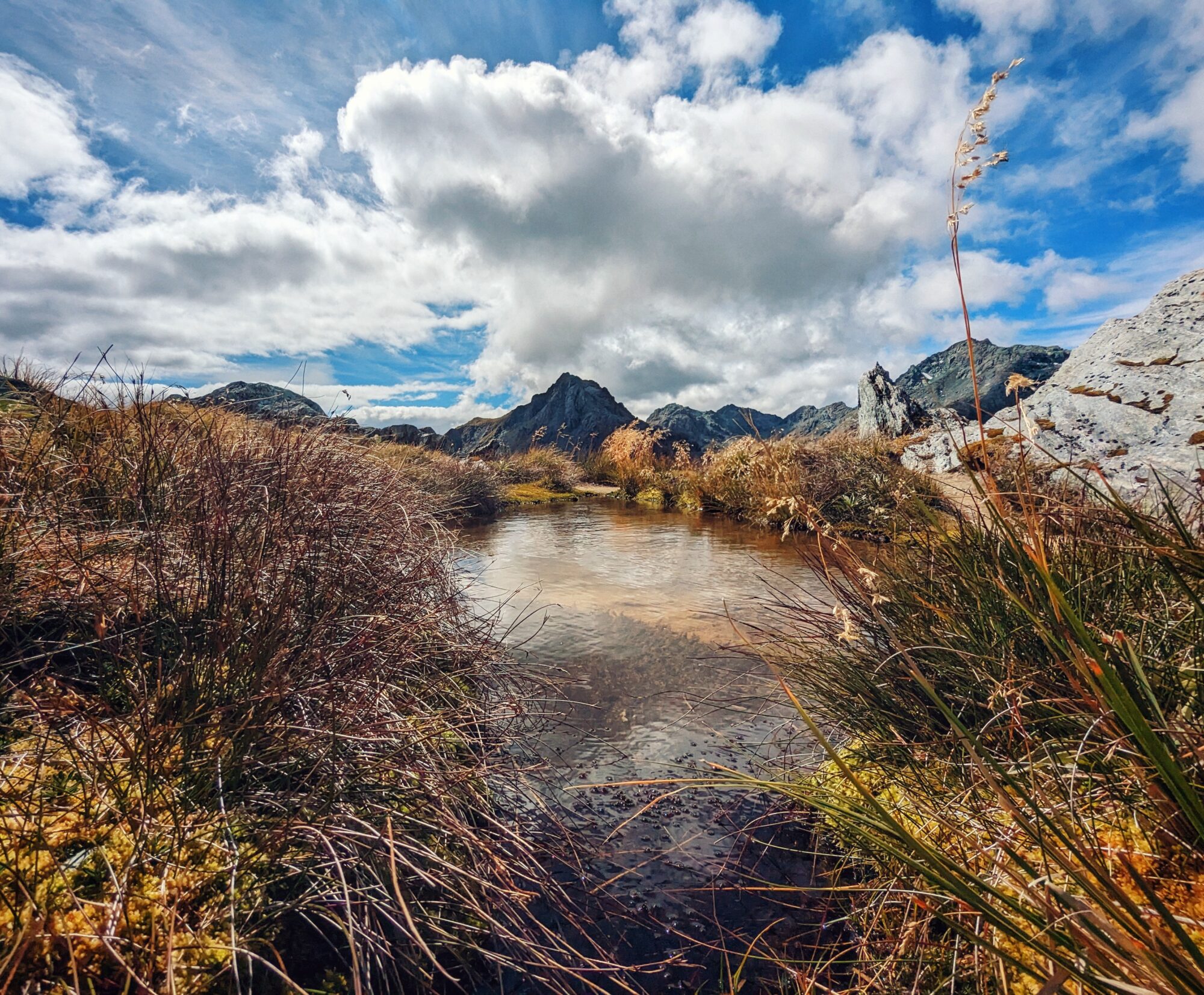
Everything I Don’t Know

Sunday Afternoon

I am on my knees in the snow frantically digging. My shoulders are searing from the effort. The shoveler in front of me tosses a wash of snow into my face but I am too focused on chopping my own shovel into the snow to pay any attention to the wet trickles of snowmelt now racing down my neck. “Rotate!” Is the only word uttered as our team of five digs a V pattern towards the tip of the avalanche probe buried a meter into the snow. “Rotate!” Once the person at the front begins to slow. “Rotate!” Even if you haven’t been digging as long as the others. “Rotate!” This isn’t a practice in who can dig the longest, it’s practicing to save a life.

Even though I know this is a drill. That there is no person at the end of the probe, I don’t slow my digging. Because even in a drill scenario with our guide standing over my shoulder I am deeply aware of the fact that the skills I’m developing now could very well be the difference between life and death. And that if it is ever me at the end of that probe I hope my friends won’t slow their digging either.

24 Hours Earlier

I am sitting in a chilly classroom above the Canada West Mountain School’s Vancouver offices. Where I, along with 15 guys with beards, two guys without beards, and one woman, are taking our level 1 Avalanche Safety Training. We’ve spent the day analyzing pictures of avalanche crown lines, snow crystals, slide paths. Talking about safety, improbability, and learning from the mistakes of others.

From the safety of my desk I feel confident in what I have learned today. My Harmonie-ish nature is on full display, answering question after question while my taciturn classmates remain silent, arms folded while our instructors eyes rove over the group looking for engagement. I have a natural skill for classroom learning, good grades come easily for me. Add to this the excitement of procuring new skills which will allow me push further into the backcountry and I’m practically bouncing out of my seat with zeal for this new knowledge.

As the day winds down our instructors throw a final slide onto the projector. It’s one we’ve already seen. The title reads: The Harsh Facts. And below the title, in frank black text it says “Most people fully buried in avalanches die.” Statistically the odds are about 50%.

You’re buried and it’s a coin toss on your survival.

By the Numbers

In the event that you are fully buried in an avalanche there are few numbers to keep in mind. The first being that 50% of people who are buried will die. On average you have 15 to 30 minutes to find the buried person and clear their airway or else they will suffocate before they can be dug out. For others no amount of digging will help. Many people who are killed in avalanches die as a result of blunt force trauma instilled upon the body as it ragdolls down a slope. And no matter how fast you dig, you can’t keep your friend from striking that tree. Sometimes you fuck up and people die. Sometimes you have put yourself in the wrong place at the wrong time and all the practice and luck in the world won’t keep you alive.

That’s what day one taught me.

Day two taught me I know even less than I imagined.

Safety Card

Our class is standing a the bottom of a tree-strewn slope looking down at our Avulators–cards that serve as a checklist for determining avalanche safety. In the game of safe backcountry travel the goal is to get as low a score as possible. Fresh snow earns you a point. Slopes over 30 degrees earn you a point while slopes over 35 degrees earn you two. Sparse trees, one point. Persistent weak layers, one point. Terrain traps, one point. Then more points the more caution you need to exercise as you travel.

On this small, unassuming roll we wrack up four points which pushes us into the area of Extra Caution. Again and again throughout the day we tally our points and never once are we in that green band of simple Caution. With each analysis my understanding of what is a safe travel zone shrinks. And with each undulating hill we climb my body begins to wither with fatigue. If yesterday I was the smart and vivacious Hermione Granger, then today I am the blundering Neville Longbottom. The outdoor portion of AST-1 has taken me right to the edge of my comfort zone. Right to the point where my toes can skim the bottom of the pool while out in front of me stretches the vastly terrifying and enticing deep end.

The Thing Is

Out here on the edge of comfort I can just start to see an entire world opening up in front of me. And right now that world, the opportunity to explore it, is too big for me. It’s like getting the keys to a Porsche when you’re 16, barely know how to drive, and don’t have anywhere to park it. I would be better served by a riding lawnmower. My skiing skills have atrophied after two years of pushing the sport aside as I saved and prepped for the PCT. Meanwhile my knowledge of snow travel is in its nascent stages.

Standing knee deep in snow, arms trembling from the effort of digging I am like a young child being taken into the wild for the first time. I am all searching eyes and tentative smiles. Eager to explore but confident only in the knowledge that I don’t know anything. However, I would argue that understanding what you don’t know is far more valuable than boasting about what you do know.  It’s too easy to find excitement in exploration and forget to appreciate the joy of learning. So for the time being I will be content to learn all the land has to teach me about its myriad secrets. About what I must understand before I can pass safely across it.

How to Afford Nature

Learning from the Pros

It’s Friday morning and there is a pile of gear strewn around the living room. Which honestly, is how most weekends start; gathering of all the required equipment from the garage and depositing it haphazardly into the apartment until it can be packed into bags and cars.

This afternoon we will load all of this gear into Starman’s comically small Mini Cooper and, with skis on the roof, drive north to Vancouver, BC, Canada where we’re taking our level one avalanche safety course from Avalanche Canada–the national non-profit dedicated to educating the public about avalanche safety. This weekend represents the start of a journey into ski touring. Something that I have been eager to dive into for a very long time. The ability to replace snowshoes with skis on winter backpacking, mountain climbing, and day trips will give us greater access to the astonishing number of natural spaces near Seattle. Plus, it’s more fun.

Of course, it is not necessary for us to drive to Canada to take this kind of class. America has avalanches too and the resultant courses for learning to navigating them safely. The American Institute for Avalanche Research and Education (AIARE) is the primary educational resource in the states and offers avalanche safety courses multiple times each winter in the mountains around Seattle.

Which begs the question: why are we driving four hours to Canada to take a nearly identical class to the one that is offered in our home city? It’s actually quite simple, really: because it’s substantially cheaper for the same education. Even after we throw in the cost of gas, and an AirBnB for the two of us, it’s cheaper. And sometimes the only way to afford your passions in the outdoors is to look for a bargain.

Accessing the Outdoors

There is a common refrain in the outdoors community that nature is for everyone. That trails, mountains, and rivers don’t care about your gender, sexuality, race, or religion. And while that sentiment may be objectively true, it ignores the very real barriers that keep many folks from accessing the wild places that belong to us all. A huge one  of these barriers is cost.

My parents taught me to ski around the time I was entering kindergarten. At that age I never wondered at the monumental effort and cost that is required to get a small child to the ski hill. Now that I have grown to the age of undeniable adulthood I am astonished that my parents ever took me and my sister skiing.

Of course, I learned to ski more than 25 years ago. Before skiing started to transform into something that only the wealthy can afford.

During the death of the Mom & Pop ski area as mega resorts grew to prominence I was sliding around on plastic skis in red nylon pants. This was before Vail Resort in Colorado began charging $200 for a single day lift ticket at the window. Before a lesson, rental, and day pass at Breckenridge Ski Area ( a Vail Resports property where I personally taught for five years) could run you $450 for a single child. To me, these are literally unconscionable amounts for a ski area to charge. And it is one of the primary reasons Starman and I have begun aggressively pursuing backcountry ski touring.

Yes, two white, middle class professionals have decided that we cannot afford to ski in-bounds anything but infrequently. By all rights we are a marketers wet dream, we should be the ideal people they are selling vacation packages to. And yet, we’re opting to leave the area behind in favor of affording things outside of skiing. As ski areas continue to increase prices they are dividing their consumer base into two groups while driving out anyone who might have a passing interest in the sport.

A Numbers Game

Visit any ski area this winter and you will notice two distinct groups. The first are the tourist–often called gapers for their tendency to stand in the middle of the sidewalk and gape open-mouthed at the mountains. Aside from the open mouths, the tourists are easy to spot because by and large they are the ones queued at the day pass window, eating in the fancy restaurants at the base area, and staying in the mega-rise condos that crowd the bottom of so many ski areas. They are the people that ski areas are looking to retain as customers.

It is not uncommon for families, who typically take one or two ski vacations annually, often drop $15,000 for a family of four to vacation for a week.This money generates thousands of jobs, and the management of every company knows it. When I worked as a snowboard instructor at Breck I was repeatedly told by managers that a ski vacation should be seen as akin to a trip to Disneyland, and bearing an equally high price tag. Ski areas understand that skiing and snowboarding are expensive sports and have decided to cater their offerings to clientele who can afford the high prices and demand a premium experience in return. And the marketing of ski area as premium vacation is working. Last year saw a 6% increase in skiers and snowboarders from households earning more than 100,000 annually.

If your local ski hill has a large luxury hotel, a spa, and has recently started offering kale salads in the lodge on addition to the standard burger. Well friend, your area is looking to attract the affluent.

However, it’s unlikely that locals are using these amenities. These are people who live within a two hour drive of the ski areas and have managed to afford their skiing through the economy of scale. You see, skiing only becomes affordable when done in bulk. Buying a $700 season pass is an absurd amount to spend unless you’re going to be skiing 20 or more days a year. Of course, the cost doesn’t stop there.

If you’re skiing 20 times a year you’ll have to mortgage your kidney in order to afford rental fees. So now instead of renting, you buy your gear. Programs like season rentals, end-of-season discount sales, and used stores have all risen to the needs of your weekend warrior. But it’s unlikely you’ll get a slope-worthy kit for less than $500. Still, people are willing to pay the cost for access to something they love and they’ll carpool and pack their lunch to be able to afford that annual pass.

How I Make it Work

In 2018 as I prepared to thru hike the Pacific Crest Trail I applied and was accepted to be part of the PCTA’s P3 Hiker Program. A group of aspiring thru hikers who would serve as volunteer journalists and photographers documenting their time on the PCT through the lens of preservation, promotion, and protection of the trail. Through this program I was put in contact with the employees at Salomon who manage athlete and ambassador relations. After the trail I very nicely asked for a pro deal and they gave me one. These deals are often what you see when you look on someone’s Instagram account (like mine) and they say they are a brand ambassador. In exchange for rights to images, tags in social media posts, and a body bedecked in logos I am given a steep discount on Salomon gear.

To me, this is a totally fair exchange. I would be taking and posting these images anyway, so throwing on an @SalomonFreeski tag isn’t a huge ask, and I genuinely like their gear. And if I’m going to be truly candid, I would not be skiing this year were it not for this partnership. Why? Because ski gear is outrageously expensive. My current touring set up would run upwards of $4,000 retail. I don’t have that much money. Especially after my thru hike as I desperately attempt to rebuild my savings account.

The rest of the equation in affording my outdoor habit comes from a near disregard for everything else. Sexy, no? I drive a used car and do as much maintenance as I can myself, I take public transit, I don’t eat out much or go to happy hours, and I’m pretty sure Starman and I are still mooching off his parents Netflix account (hi, Carol!). In some ways it’s simple, I prioritize going outside over almost everything else. In other ways it’s a much more complicated daily calculation where I am constantly assessing what I value. It takes a lot of savings and effort to get outside as much as I want to.

While my financial priorities work for me, I think this points to a larger issue within the outdoors community as a consumerist society. Can we really say that the outdoors is for everyone where there is such a high price tag on getting in the front door.

Who is Welcome

I can hear the inner workings of an argument prone mind saying “But Kara, skiing and snowboarding are outliers, they don’t represent the cost of the outdoors at large!” And I hear your point irate reader, I do. Certainly skiing and snowboarding are substantially less expensive than motorized outdoor sports such riding snowmobiles or ATVs, paragliding, SCUBA diving, any sort of sailing, and trad climbing. And skiing is certainly far less expensive than day hiking—unless you don’t have access to a car in which case you can’t get to the trailhead, but that’s a post for another day.

However, unlike all of the activities listed above, skiing and snowboarding require the average user to pay for access to the means for skiing in the form of lift passes. This distinction is what ski areas are now exploiting with exorbitant lift ticket prices. And what I, and an increasingly large numbers of skiers and riders, are attempting to avoid by pushing into the backcountry.

Needed Change

So what? So ski areas want to charge $200 for a lift ticket. So some people won’t pay that and the ski areas are contented with the affluent few who will. This is how capitalism works, the suppliers can raise prices in response to demand and people will adapt. Is this really a problem?

Yes, yes it is; if you want there to be a future of skiing.

From a purely economic standpoint, ski areas literally cannot afford to follow their current business model. In the last decade the average age of people on the slopes has increased from 34 to 38. Meaning that the skiing population is aging and not being replaced by new, young people. Furthermore, as Baby Boomers reach geriatric age skiing may experience a massive drop in participation. The model of catering to the wealthy is certainly not new, but that doesn’t mean it’s a sound, or even moral, long term strategy. If ski areas want to survive they will need to adapt, embrace new people, and lower the bar for entry.

The Invisibility of Nature

My skis glide uphill across the icy, granular snow. Each sliding footfall accompanied by a sound almost like a toy laser gun. Slowly, my mind is schussed into silence as I descend the hill into darkness. Lights blare in the distance, floating orbs in the night sky that belie the presence of grinding, mechanical ski lifts. Bundled forms slide past spouting fragments of conversation, laughter. Meanwhile, warm breath sibilates between my teeth to form a cloud before it’s gobbled up by the greedy cold.

For an indeterminable minute, hush.

A slackening of the thoughts that ricochet around the echoing gymnasium that is my mind and I am lost in the effortful movement of my body.

This is why I do it. Walk, or ski, or run alone in the wild places that are the very furthest away from civilization that my body can carry me.

For the unconscious moments of mental stillness that I am afforded when my entire being is consumed in a driving blitz of burning movement. Moments that I can only recognize once something has pulled me from deep below the water and I am deposited, spluttering against the shores of cognizant thought. Sometimes, I can find these moments in efforts of muscles screaming so loud that it drowns out my entire interior world. Others, like tonight, when the repetition of movement sneaks into my mind and lulls it to quiet. Like falling asleep on a rolling tide.

There is a distinct kind of pleasure I’ve found in these moments of complete abandon. One which is so compelling that I am coming to build an entire life around it. I push my body deep into the wilderness for the stillness it bestows on my recalcitrant mind, yes. Undeniably. But also, for the time spent unwatched by a single one of my fellows on this billions-populated speck of careening space rock. The opportunity to shed the wet blanket of gaze that I carry with me daily. Though some of the days are easier than others. I have found that no matter how comfortable that wet blanket becomes it’s presence it’s still noticeable. I am still wearing the wet blanket.

But not out here among the darkness and the trees. Here I am joyously invisible, able to take whichever form I choose.

Hometown Tourist

There are endless articles written about how to avoid looking like a tourist.
How to fit in, feel like a local, and conceal the fact that you don’t know everything about a given destination. Some of these articles focus on concealing your lack of knowledge for the purposes of safety. But far more promote the idea that to be a tourist is to somehow lack in an essential sort of cool reserved only for locals.

I’m here to tell you the opposite of what all of those articles say. I think you should embrace being a tourist whether you’re visiting or a recent transplant. There is something special about visiting the sights that cities promote as essential parts of themselves. Yes, the Space Needle is expensive and a little cheesy. But it’s also an engineering marvel that offers visitors a wonderful way to orient themselves in a city full of funny shapes and lakes that must be navigated. And sure, the Seattle waterfront is a little kitsch but it’s also teaming with smiling faces.

This weekend I decided to embrace everything that is touristy about this new place that I’m lucky enough to call home. Because enthusiastically taking the same picture that 1,000 people before me have taken doesn’t mean I had any less fun.

On our first day I took Lisa to the Ballard Locks where we stood for hours and watched boats come through the canal into Lake Union. The Locks are one of those activities which sound lame but inevitably captivate people. Watching the engineering necessary to control something as powerful as water, the competent boat hands, and the surging blue of the water itself.
Puget Sound, which nestles against Seattle’s western flank, is shot through with islands to explore while it’s dark waters conceal an entire world of life that is lost to those who live only on land. Both Lisa and I grew up in Colorado, a land locked state where water mostly came in the form of fast moving ice melt that was as deadly as it could be fun. Because of this neither of us have ever been much comfortable around the wet stuff.

But ferry travel is something I find inexplicably delightful. To use waterways as a means for public transit. To connect one city to another by gliding across an open sound. Incredible.
The Space Needle. Seattle was kind enough to give us some wonderful weather this weekend.
Lisa’s last day in town we walked out along the water front and watched the sun set. The sky faded from a bland white-blue to a riot of colors in an instant. Music played from every store front, blending into a cacophony of white noise that was easy to ignore.

The Woman Who Called for the Wild

Paula Schwimmer is a slight woman in her late 60’s whose close cropped salt and pepper hair scatters around her round face. Twinkling eyes shine out from behind her horn rimmed glasses as she escorts her husband Rafe down a Seattle sidewalk. They hold hands as they navigate the city so that Rafe doesn’t get lost. Since his Alzheimer’s diagnoses four years ago Rafe is prone to wandering off and not being able to remember how he got there.

When her husband’s illness began to necessitate full-time care Paula left her 40 year career as an educator to take care of him. “It’s a different kind of closeness now. When you’re married for so long, you envision growing old together and traveling, doing stuff with the grand kids,” she says. The couple have been married for 38 years. “It wasn’t what I had expected for our retirement,” she says.

——

Days after reading Paula’s words I am lying next to Keith in our dark bedroom; we’re talking about the future . The various adventures that we want to go on this year and in those to come. Dream trips, future locations and where our lives might one day take us. The conversation is punctuated by the phrase “wouldn’t it be cool if” as we circle through mountains to climb, trails to hike. The experiences around which we want to build our lives. And equally importantly, the things that we don’t want.

“Part of being alive is awaiting the revelation” of who you’ll become.”

The Art of Decision Making – The New Yorker

At 30 I am entering the part of my life where people are less likely to describe my choices as phases. When I tell people that I want adventure instead of children fewer people assure me that I will change my mind. Though, not all. Only time and the eventual onset of menopause will ever render this point moot. Until then, I must endure the pitying looks of aunts and criticisms of unbelieving strangers who believe that, of course, I do not know what I am talking about. People have a propensity for defensiveness if your choices differ from their own. I have long since accepted that a person’s incredulity is rarely about me, but rather about what my choices might say about them. Motherhood still stands as the central definer of womanhood. But I have weathered the endless choruses of disbelief for two decades now and I am used to the storm that comes with taking the path less followed.


——

Despite my bullish urge to resist, the changing of the year has brought me into a period of reflection. I’ve been thinking a lot about choices lately, and which ones I should make to become the person I wish to be. Even though that woman often feels a long way off I feel compelled to dig through the sand to find her, no matter how often the endless gains slide back into place.

“…we aspire to self-transformation by trying on the values that we hope one day to possess…”

The Art of Decision Making – The New Yorker

——

The days are getting longer. Just a little, but I can see it in the evening sky as I drive west into the mountains outside Seattle. As I drive I think about Paula, a woman I have never met. A woman who was not even the focal point in the article in which I read about her and her husband. And yet her words “it wasn’t what I expected from our retirement” pierces a barb straight through my heart and I haven’t been able to get her out of my mind.

For better or worse I have always been distinctly aware that death comes for us all. When I was a child I would lie on my bedroom floor, and with eyes closed try to remember what it was like before I was born. My aim was to dredge up memories of life before my life. In doing so I was confronted with a stretching darkness. In the way that all children experiment as a means for learning about the world around them I too was attempting to reconcile my place within the prodigious expanse of time. As an infant might drop a spoon from their high chair again and again just to see how many times their parent will fetch it from the floor, I too was searching for the bounds of what is.

My searching rendered me a devout atheist by the time I entered middle school. What I discovered behind my eyelids revealed that before I was born I was nothing more than a formless, unconscious bundle of dispersed atoms. Presumably, I reasoned, that would be where I would return to.

I have spent the intervening years attempting to answer the question that the beloved, and now lost, Mary Oliver asked of us all: “Tell me, what is it you plan to do with your one wild and precious life?”

Apparently, at least in part, the answer is that I will leave the office early, drive west into the coming gloom of dusk and ski uphill in the dark just for the delighted play of sliding back down across the grainy snow.

Nestled next to my heart I carry a small but heavy stone. One that begs me to look upon the beauty of the world in the knowledge of the fact that one day it will all be lost to me. Some days that stone feels so heavy that I worry it might break me right in two. But it also fills me with a resolve to not spend my life in the pursuit of shoulds. I find myself lucky enough to be entering a fourth decade on this planet I am called to pursue the freedom that comes from time spent in the mountains chasing sunsets across ridges and forever wondering what is just beyond the horizon.

Goodbye sweet Mary, you were a light upon this world who called us to see the wonder that is all around.

Wild Geese by Mary Oliver

You do not have to be good.
You do not have to walk on your knees
For a hundred miles through the desert, repenting.
You only have to let the soft animal of your body
love what it loves.
Tell me about your despair, yours, and I will tell you mine
Meanwhile the world goes on.
Meanwhile the sun and the clear pebbles of the rain
are moving across landscapes,
over the prairies and deep trees,
the mountains and the rivers.
Meanwhile the wild geese, in the clear blue air,
are heading home again.
Whoever you are, no matter how lonely,
the world offers itself to your imagination,
calls you like the wild geese, harsh and exciting-
over and over announcing your place
in the family of things.

Calm Between the Storms

Through the dark a warm, red glow begins to blossom, prying me from sleep. Slowly the glow blooms into a persistent light and I am dragged into wakefulness. Before I can fully wake, before I can choose to engage with the day, I roll over and turn my alarm clock off. I am not going to the gym today.

In fact, I didn’t go to the gym once this week. Not once. Each morning when my fancy daylight alarm clock began to brighten the room I would turn it off and go back to sleep for another hour.

For the first time in what feels like a long time I have completely fallen out of the habit of exercising before work. Foregoing my normal practice in favor of extra hours spent between the sheets. When the darkness of morning comes calling I ignore it. The difference is, that this week I elected to stop feeling bad about it.

_______

Years ago I was introduced to the concept of the Big Why. The Big Why is the concept of drilling way down deep through the desire behind any goal in an effort to figure out what is motivating our actions. Once we understand our Big Why it becomes easier to follow through with the necessary steps to to accomplish our goals. For more than two years my Big Why was attempting a thru hike of the Pacific Crest Trail.

When I didn’t want to do squats (my very least favorite strength training activity) I motivated myself with the knowledge that squats lead to strong legs and strong legs lead to a higher likelihood of completing my hike. The same was true with money. When I wanted a fancy coffee, or to splurge on a last minute trip I would weight that immediate desire against the much bigger desire to save money for the PCT. Suddenly every dollar I spent became potential PCT money and as a result it was easier to skip the fancy coffee and put that money into my savings account instead. My why was big enough to consistently influence my daily decisions. A touchstone of sorts which I could return to when the desire to be comfortable or entertained in the moment threatened to derail the dream of thru hiking.

However, when I completed my thru hike of the PCT on September 11, 2018 my big why vanished. Poof. It was gone. I had a few plans on the horizon, but nothing that required long term dedication in the way that preparing for the trail did. And that lack of motivating force impacted how lived my life. Even though it would be weeks before I could begin to recognize it.

In the weeks immediately following the trail I began running around the lake in my neighborhood. I signed up for a nearby gym. Told myself that I wasn’t going to lose all of the fitness I had gained over the previous months of backpacking. I thought I could roll this experience into another epic adventure, something big and sexy. I was riding a high of accomplishment and in doing so ignoring how my body was feeling.

Barbell weight training, something I genuinely enjoy, became a chore to be dealt with. Running began to feel about as enjoyable as filing taxes. On more than one occasion I would choose hiking destinations based on the quality of story they would produce, not how happy they would make me. I had become someone with two thru hikes under my belt. Someone who gets outside every weekend, hits the climbing gym at night, and does epic shit. But I was also tired and unmotivated. Misdiagnosing the cause of my malaise I plowed forward.

Maybe, I thought. Just maybe what I just needed was another big project to throw myself at. If I could just cultivate the right level of stoke then all my desire to train and get outside would come rushing back. But in the way that mother nature holds us and allows her foolish human children to find their own paths across this planet, she is also capable of stepping in our way when we are in danger of doing ourselves harm.


_______

This winter in the northwest has been characterized by alternating warm rain and snow storms. Resulting in a highly unstable snowpack and high-risk avalanche conditions which have forced me to stay at lower elevations and closer to home. My personal life has been characterized by stretched finances as I looked for a job and rebuilt my savings account after taking nearly eight months away from the workforce.

In the way in which I pursued the PCT with an unbalanced fervor, the pendulum is has since swung the other way and I find myself craving rest. Yet, having this swing coincide with the new year has left me feeling distinctly at odds with a society that fetishizes productivity and busyness. During the early weeks of January while the internet screams about 10 habits of highly productive people, declaring that this will be the year of the new you. I feel like I am constantly walking through a blaring motivational Nike ad when all I really want is a nap.


_______

The proverbial Greek choir dubbed ‘they’ says that there is calm before the storm. I have always found that there is a calm after the storm as well. Living our lives in endless circles as we do, means that these are perhaps the same calm. A season of effort followed by one of rest. Around and around we go.

At the center of an experience it is hard to see the edges. When I am living in the calm I worry that I will be tied to this bed forever. That my stillness will stretch to the horizon and I will be lost. And while I am amid the flurry of excitement that is the storm I pretend that this too, is sustainable. But here on the edge it is possible to see that change will come in time and that I need not cause myself undue strife in attempting to accelerate it’s approach.

During the last few weeks, as I have waded through the morass of unmotivation I have slowly felt my desire for adventure returning. The months long break is slowly lifting and I can feel my drive to explore returning. The other day as I took a walk at lunch I felt that familiar tug to grab my running shoes. This week when thrilling boxes of new ski gear arrived at my door I once again began browsing weather reports and drive times to my local ski hill. While the tendrils of my burning desire to explore outside are beginning to rekindle I have not yet regained the urge to labor outdoors.

The new gear sitting unassembled on my living room floor speaks to the promise of new, softer adventures. I am not ready to push myself, lungs burning, down 20 miles of alpine trail. But skiing feels like pure play in the way that hiking does not. And that is what I am ready for, play.

Unbalancing Act: Reflections on PCT Thru Hiking

“…this, dear reader, is what I want to tell you about the Pacific Crest Trail. That it is not the romance you expect it to be. Nor is it the suffering which one can imagine it to be, nor the constant elation that many wish it to be. But as with every dream turned accomplishment it lies somewhere in the middle.”

A hiker stands with their arms wide looking at an impressive peak in the distance.

Outside the window the North Cascades roll past as the bus travels south towards Seattle. A verdant green valley stretches away towards craggy cliffs which jut skyward to be capped with low grey clouds. As viewed from the enclosed glass bubble of a Greyhound bus this otherwise expansive view feels distinctly minimized, small, removed—as though I am being sealed off from the natural world. With every traffic-laden mile I roll back hours of walking and this, more than anything, makes me realize that my PCT thru hike is well and truly over.  

A group of hikers gather next to the Mexican border wall.

On March 27, 2018 I stood at the southern terminus of the Pacific Crest Trail outside the minuscule town of Campo, California. Hemmed in on all sides by rolling desert hills and nervously laughing strangers I took my start day pictures. I remember thinking that if it were not for the PCT no one would visit this particular stretch of border wall, this particular stretch of chaparral and sand and sky. But there we stood, 35 pale, squinting strangers assembled under a flat blue sky looking north and pretending we could see all the way to Canada. All the way along this wild stretching journey laid out in front of us. The plan: to walk the land between Mexico and Canada, the height of a country. An act which on that day in late March felt more feasible than it does now, some 168 days later. Bizarrely it is only upon completion of the PCT that I have come to realize how absurdly improbable the task of thru hiking is.

At its most basic level a Pacific Crest Trail thru hike is an exceedingly long logistical and physical challenge set against the backdrop of some of America’s greatest natural spaces. Which, when compared to the romantic notion of what people believe a thru hike to be, may sound overly reductive. But the most basic elements of thru hiking are precisely what drew me towards it. Like a thread tied deep within my chest tugging me forward through the months of preparation, it was the thrill of the challenge that sustained me. I have long been drawn to being physically challenged beyond what is expected, or assumed that I am capable of. Furthermore, this hike was an opportunity to spend an extended period of time backpacking in remote places—something which is central to who I am as a person and seek to do as often as possible. I didn’t want to hike the PCT as a means of suffering my way towards a life realization, but because I believed I would genuinely enjoy it—the sleeping in the dirt, the hours spent walking through wild places far away from the next human animal, the self reliance and accompanying logistical planning.


“I remember thinking I wasn’t sure if the PCT would be a life altering experience, or simply another experience in a life.”

And this, dear reader, is what I want to tell you about the Pacific Crest Trail. That it is not the romance you expect it to be. Nor is it the suffering which one can imagine it to be, nor the constant elation that many wish it to be. But as with every dream turned accomplishment it lies somewhere in the middle. More indescribable, more nuanced in the ways it will affect you. More prone to leaving you staring at your keyboard in frustration as you attempt to express an entire world of roiling emotions into the cumbersome, imperfect things we call words. Early on in my hike, as I stood panting atop Mount Laguna and looking down onto the vast beige desert below me, I remember thinking I wasn’t sure if the PCT would be a life altering experience, or simply another experience in a life. Now that it has come and gone and I am left standing along the shores of the aftermath I can say it feels more like the later.

Kara standing on the PCT in Washington, she is smiling at the camera and there are mountains in the background

Looking out at the great forward expanse that will be the rest of my life, the PCT stands behind me as part of who I am, not the entirety of who I am. An experience that has left me changed, but was not life changing—a sentiment that I tend to feel a little guilty about. As though I should have produced a deeper moral to this story. That I should want to leave my life in the city, throw everything in my backpack, and wander into the wilderness where I would be my deepest and truest self. I know this is the story that many people want to read. But for me it is simply not true, and I have never been a person capable of dishonesty simply to placate others.

You see, there is a prescribed narrative splashed across the pages of books and the screens of social media, a story that says thru hiking will radically change your life or else thru hiking will become your life. For there are a small but highly vocal minority of hikers for whom long distance thru hiking has become the central pillar of their lives. They post YouTube videos about gear and food in the winter. While during hiking season they fill our Instagram feeds with stunning images of wild places and wax rhapsodical about the purity of life on the trail, how the simplicity of living from a backpack and wandering through the woods will lead you onto a higher plane of being. This narrative is so pervasive, that to the uninitiated it feels preordained. In the days after I finished the PCT I was subjected to the constant refrain: what’s next? Strangers who had followed my hike inquired about my next big hike. Would it be the AT? CDT? Something abroad? The online peanut gallery has read the script and in witnessing my success looks to cast me in the roll of thru hiker for life.

Three hikers and their gear sit in the bed of a pickup truck, they are all smiling.

Yet, thru hiking is not something I wish to build my life around. I believe the act is simply too unsustainable for that—you can’t thru hike forever, no matter what social media portrays. And beyond that, neither my body nor mind have the desire to do so. To thru hike repeatedly at the exclusion of all other activities would be to trim oneself into a mere shadow of the multitudes we contain. I am a thru hiker as much as I am a writer, a skier, an adventurer, a traveler. And substantially less than I am a daughter, a sister, a partner, and a individual with myriad desires and flaws.

Kara and Keith smile at the camera next to their tent in Northern California on the PCT.

Please don’t be disappointed dear reader. For while my months long walking vacation has not rent me into a new person for which unabated hiking is the only path to happiness, it has gifted me a great deal.

Thru hiking taught me that there is a great joy in unbalanced, unrelenting forward progress towards a singular goal. The very nature of thru hiking gives us that. Something with which we can focus all our energy towards, an unambiguous pursuit to which we can commit fully and in doing so strip away the banalities and distractions of a more complex life. To realize that balance is rarely at the center of great achievements, but conversely is required for us to be full and complete humans. That balance should be sought in the long game, not the cause for strife in the minute workings of a day.

A hiker with their arms spread wide silhouetted in tunnel while hiking the desert section of the PCT

In the unbalanced volume of time spent walking I was afforded a chance to think, to wander and wonder about my life, to leave space for realizations about what is important. In the broadest sense I came to realize that I do not want to spend my life working towards things to which I only feel the most obligatory passions. Namely, dedicating my life to a career. I have struggled most of my life against the highly American notion that our work lives should be placed at the center of our whole lives. I believe this is most obviously seen in the question we all deem most important to ask new acquaintances–“what do you do.”  To which it is implied “for work.” Not what do you do for joy, or to relax, or to challenge yourself. But what do you do to earn money, who are you in relation to the way you feed your ever hungry bank account. And in the drive for transparency I must admit that it scares me to write this.

You see, upon leaving the trail I am also unemployed and will need to seek work, and what if some future employer reads this and in doing so discovers that a my career has never found a home in my heart? It is subversive in the most basic way to not want to work. America believes itself a country of hard workers and capitalists. But thru hiking gave me the time to fully step outside that narrative and see how artificial that idea is. To re-frame my life’s long struggle to figure out what I want to do with my one wild and precious life, and begin to frame that question outside of a career. What do I want to do with the rest of my life if my job is not the most central part of it, but instead a facet of who I am?

Maybe in some ways thru hiking the PCT simply gave me the space to recognize the full measure of myself. It gave me time to see what I thought was important, and most invaluably, why those things were important to me. To have the time and space to fully observe why I choose to do things, even the somewhat silly things like thru hiking was a tremendous privilege.

In truth my beautiful reader, I didn’t hike the PCT for any real reason other than I wanted to. There was no burning desire to memorialize a loved one, nor did I expect the trail to somehow solve all of my life’s problems. In the most literal sense there was no point to it, no purpose other than that I thought I would like it. In so many ways the whole PCT is a pointless, deeply absurd endeavor. To walk the land between Mexico and Canada along a set line between two arbitrarily decided borders–and to what end? To live a life of social conformity–and to what end? If I don’t have my own own reasons for doing something, then why am I doing it? If I am not finding joy in the process or working towards a goal, then what am I doing and why? Why, I was given the time to ask, does one choose to anything in life?

A hiker stands on a the PCT overlooking a valley, there is a rainbow in the distance.

Ultimately, I chose to thru hike the PCT because the challenge appealed to me and gave me the time to shed the gaze of the world and play freely in the outdoors. And that, maybe more than anything, is what the PCT was to me. A chance to honor myself by doing something that was so purely selfish and joyful. Yes, maybe that is the real truth of it—to me, the PCT was an act of joy.

For joy is not something that is without pain, or suffering, or strife. Joy is electing to go through that pain because what is waiting on the other side is so much grander and more beautiful than comfort and conformity could ever be. To bleed, to ache, to hurt in pursuit of something that you want–that is joy. To peel back the layers of your skin like a wild, feral, inhuman beast, to dig deep within yourself for no other reason than the thrill of adventure–that is joy. To choose how you suffer, to look far into the distance and recognize that this ridiculous idea of walking to Canada is nothing but an expression of want–that is joy. It is a privilege to be given the body, time, and world in which that is a possibility.

So no, the PCT did not change my life so much as it was an opportunity to step away from how we are told to live and open up to the ways in which I would prefer to live.

Getting Good at Being a Little Afraid

You’d think it would be easy to find small suction cups in a city as large as Seattle. I certainly did. In fact, as a Millenial in the age of access I basically assume that I can find any item in 36 hours with minimal time or money spent.

In a somewhat disappointing turn of events, I have discovered that this is sometimes just not true. Which is how I came to be standing in the checkout like at my third Home Depot stop of the day hoping that the adhesive-backed velcro I was buying wouldn’t require more than a few hours of scrapping to come off the inside of my car windows.

But let me start at the beginning.

I am someone who is 30% good at planning, 50% amazing at hoping for the best, and 20% willing to grit my teeth and laugh through a bad situation that came about as a result of my poor planning. Which is to say that when presented with a completely free four day weekend I made three bad plans; each one thwarted by dubious safety, distance, and the fact that winter in the Pacific Northwest is substantially less forgiving than the winters I’d grown accustomed to in Southern California. Eventually with snow and cold temps in the forecast I decided on a small road trip through the interior of British Columbia, sleeping in my car along the way. The velcro I was buying from Home Depot was to affix insulated cut outs to my cars windows. The cut outs, made from a similar material to windshield sun shades, were to prevent me from freezing to death by adding much needed insulation to my car.* But because I am a reluctant planner at best, I was buying said velcro for said cut outs on Friday night on the way to the Canadian border with my car already packed and only about half of my insulating cut outs made. It was fine. Or, it probably would be.

An insulating cut out for a rear window in my car. The suction cups were supposed to go in the corners and attach it to the window.

* Fun Fact: While sleeping in a car you lose most of the heat through your windows which is why insulated cutouts are a great idea if it’s going to be cold. They’re also good for added privacy.

As I drove through the Canadian border, then through and away from the bright lights of Vancouver I was admittedly a little scared. The whole trip felt reactionary and maybe a little dumb. I was driving north into a mild storm because the weather everywhere else was worse. I had a scribbled list of potential campgrounds that would hopefully still be accessible in late December. And in the same list some views I’d hope to see along the way if they weren’t obscured by clouds. Even if this trip was a dud, at least it was better than spending four days alone in my small apartment.

I got to my first campground (read: dirt parking lot in the trees) around 10pm and as I was setting up my car for sleeping a light snow began to fall. In the space leftover by my conscious brain fear swarmed around like irksome gnats–near invisible yet persistently annoying. What if it snowed more than the forecast called for and I couldn’t get my car out in the morning? What if it was too cold to sleep? What if the insulation I was sticking in my windows was magically too insulated and I suffocated while I slept? Was that even possible? Or what if some crazy ax murderer came and, ya know, murdered me? Was I too close to the road? Too far? On what side of adventurous and idiotic am I currently residing?

I had only winter camped once before this trip. Three weeks previously Starman and I hiked up Rainier and camped below the Muir snow fields. It was challenging and cold, but I had another person to turn to if things went wrong. But out here there was no such security. For all my experience outdoors, for all the miles hike and solo trips embarked on, being outdoors by yourself can still bring forth a fear-spiral of ‘what-ifs.’

As I sealed myself into the bubble of warmth inside my car my only option was to hope for the best. I have rarely been able to logic my way out of being afraid. The only way I’ve found to get over being scared is through experience. By exposure to small fear again and again we slowly grow into confidence by way of practice.

And you know what? I didn’t freeze (spoiler).

The next morning I woke to four inches of snow on the ground and fluffy white flakes drifting from the sky. I drove north.


“On what side of adventurous and idiotic am I currently residing? “

Down two lane roads with no tire tracks and no signs of people for hours. I took small, quiet walks to lookouts and silent lakes. Sliding in the footprints of strangers left behind before the latest snow. It feels eerie to be alone in natural spaces that are designed to hem people in, to protect them. I stood against signs pinned to ugly chain link fences and listened to the somber roar of a winter waterfall as the snow slowly worked to fill in my footprints.

I saw small avalanche slides between trees laden down with white caps of snow. I drove under massive slide paths where the trees were shorn down to their roots by a long since melted tidal wave of snow. The land in this part of the world is stunning and I am exultant in its presence. Chock full of mountains rearing up from deep valleys, where towns grow small and stunted, the land too steep for any sprawling human habitation. And in the early afternoon the darkness begins to snake it’s tendrils across the sky and there is that familiar voice of fear again.

While this land is beautiful in the extreme there is an undercurrent which belies the wonder. To err in a place of darkness and snow is to accept the chance of high consequences. Hence the insulated cutouts. The two sleeping bags and pads, spare socks and warm booties. The extra layers, jackets, emergency blanket, shove, stove, and boots. My car is full of so much gear I likely won’t use because that is how I handle the fear of newness–with contingency plans and warm pants. But also because my knowledge of traveling in places like this tells me to be careful.

I have come to recognize myself as someone with a proclivity for to pushing beyond my comfort zone. In college I went from an occasional jogger, to having my ACL repaired for the second time, to standing on the starting line of a half Ironman triathlon in 18 months. After college I went from running the rare half marathon, to running ultra marathons, to lightweight backpacking, to completing a 2,650 mile thru hike of the PCT. All in three years. I feel like a coy fish who is constantly outgrowing their pond. Slowly changing until all at once I feel like a different person. The extra gear in my car is a means for that growth. The extra gear is what will allow me to take the first tentative baby steps into new adventures while relying heavily on previously gained knowledge in order to mitigate risk. The only way I’ve ever learned to safely progress my skills in the mountains are by keeping one eye on the lessons of the past and by embracing little fears.

Which is why I didn’t take my inability to find suction cups as a good reason not to go on this trip. It’s why I didn’t turn around at the Canadian border as the sun set and the temperature began to drop. It’s why when I woke on Saturday morning I pointed my car north and drove. Because the only way I’ve ever found to move forward is to embrace the little fears and allow them to teach me what they will.

What You’re Not Seeing

8:03 a.m. Saturday

The first tenuous glow of morning light creeps into the bedroom. Lighting the walls from darkest blue to grey. Revealing the small tidy bedroom I share with Keith, where at the foot of the bed sits: nothing. There are no ice axes propped against the closet, nor backpacks packed and sitting ready to be scooped up at the first blare of an early alarm clock. The emptiness is a promise of calm. Outside a cool, rainy day is blooming into being while I luxuriate in the idea of having nowhere to be. Nothing on the agenda other than the chores that help adult life chug slowly forward.


“In the age of internet over-sharing I have fallen prey to the idea that we must constantly be documenting and sharing in an effort to convince internet strangers that I lead an epic life.”

I have been slow to appreciate these weekends spent indoors. Guilty of the self imposed need to fling myself forward at full speed, never ceasing until illness, injury, or burnout bring me careening to an inelegant forced halt. It has taken time to embrace days spent caring for, or rather about, the less share-worthy aspects of life. In the age of internet over-sharing I have fallen prey to the idea that we must constantly be documenting and sharing in an effort to convince internet strangers that I lead an epic life.

Yet I am growing, learning that there is a sort of gentle joy to be found in moderation and silence. That in caring for things beyond the outdoors I can collect more happiness in my daily life. A novel contrast to the previous two years where preparing for and completing my thru hike of the PCT consumed so much of my attention. To have reached Canada and be released from that singular consuming goal feels like being moved to the passenger seat. Where, without the need to keep my eyes on the road I am free to look around at all of the things I have been missing.

This morning I will drink coffee in bed while reading. I will make breakfast for Keith and myself taking the available time to cook the kinds of foods you can’t eat on the trail. A cheesy omelet with sauteed peppers. Chocolate chip pancakes with strawberry jam on top. While I cook I listen to Vanessa and Casper of Harry Potter and the Sacred Text discussing expectations. I delete Instagram off my phone, thus removing any expectation I might place on myself to share, tell, post my life for the benefits of others. Thus removing my own expectations to be good at social media.

11:47 a.m Sunday

I am sprinting after a rubber ball in the rain. My lungs are burning and I know my legs will be inconsolably sore tomorrow after having abandoned any attempt to take it easy as I learn this new game. Gaelic Football, a confusing mess of a sport akin to soccer, basketball, and rugby all rolled into one. But fun, undeniably fun. The delight I take in team sports is being rekindled after such a long absence. Saying yes to thru hiking meant saying no to a great many other things. Because you just can’t have it all. At least not all at the same time. The longer I live on this twirling blue rock the less I am even inclined to try.

Monday 8:17am

 During the bus ride to work I am scrolling through the newly re-installed Instagram. Comparing hashtags and looking at the success of my last few posts. I am debating captions and filters when a little voice in my head reminds me that I don’t have to do this. The outdoor industry as it is portrayed on the internet is not a club I necessarily want to be a part of any more. As I slide past the billionth picture of a thin, conventionally attractive, white person standing with their back to the camera as they look at a mountain peak with a caption about following your dreams I almost throw my phone out the damn window. Luckily they seal bus windows to prevent these exact morning existential rage meltdowns.

The further I scroll the more the images look the same. Each post about sending it. Crushing it. Conquering a climb. Being stoked. Living the dream. Epic to the max. Type 2  suffer-fest fun. Beautiful people in beautiful places saying nothing much at all.

On the internet the outdoors is for escapism, not activism. Full of people who quickly become defensive at any political comment or critique that the community could do with a little diversifying. I cannot begin to recount the number of times I have heard a fellow white person say “I’m not here to discuss politics, I’m here to escape it!” And while we are all entitled to take space away from the quagmire of political vitriol, I find that those who are the safest in our society are those who can best afford to check out and get out. Both emotionally and financially.

And here I have a choice. And so do you.

I can continue to post image after image of the beautiful images I have been privileged enough to visit, toss in an inspirational caption about freedom, maybe a questionable quote from Edward Abbey. I can continue to portray the outdoors community as white, able, thin, and wealthy, continue to consume media from accounts and brands who do the same. Or, I can make a different choice. The reality of which, isn’t much of a choice. Because hard choices come when you have something to lose. Sure, I want people to read what I write and I want them to like the pictures I take but it’s not the end of the world if they don’t. I’d rather be honest and unpopular than promote an ideal I don’t think is helpful.


“…if you don’t know something, you can’t love it. And you won’t bother saving something you don’t love.”

As a lifelong member of the outdoors community I can say we could do with a little growth. And the first thing I’d like to see us do, as a community is to be more transparent about what it means to get outdoors. There will always be the athletes doing first ascents in wild places where no person has ever been. But that doesn’t mean there isn’t also room for walking 100 feet down a trail and sitting on a warm rock in the sun. Or going on your first overnight trip. Or your first hike period. You don’t have to be outside at every opportunity, fair weather hikers are still hikers. It all counts. We should celebrate it all. 

By opening up the definition of what it means to be an outdoors person we will be rewarded with a more diverse community of folks who know that they have a place in the outdoors, who love these wild spaces. Because if you don’t know something, you can’t love it. And you won’t bother saving something you don’t love. And folks, this planet needs our love, needs saving. So let’s lower the standards of admission into the outdoors and let everybody in.

Diversifty our feed – 10 rad accounts to follow

Brown People Camping
Unlikely Hikers
Natives Outdoors
Shooglet
Pattie Gonia
Queer Appalachia
Melanin Basecamp
Carrot Quinn
Nicole Antoinette