SDTCT – Day 1

Mile 0 to mile 19

The SDTCT runs close to the US-Mexico border. As such it seemed only right to raise money for an organization doing humane social justice work in this area. Border Angels, a non-profit organization that works to reduce the number of deaths on the US-Mexico. If you have the means to donate I strongly encourage you to do so.

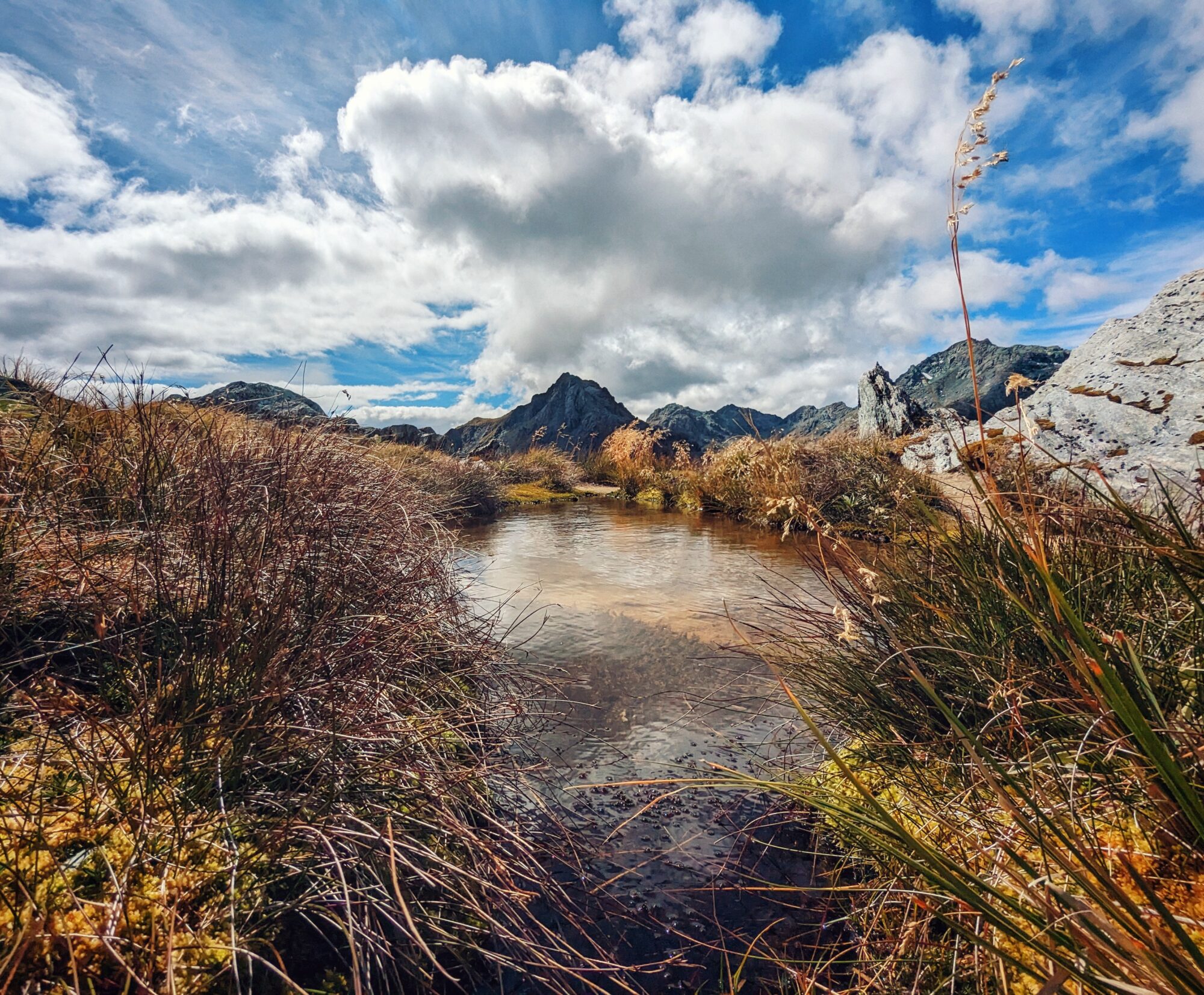
Sasha’s father is driving us to the eastern terminus of the San Diego Trans County Trail. In the early morning light the road drops away below us and I can see the Salton Sea where it meets the horizon as an expense of flat white nothing. As though the earth fades away at the intersection of sky and brackish water. Even in the early morning, the desert here is brutal. Mountains like curtains thrown over furniture drop onto painfully flat valley floors shot through with pink sand washes. And it is these self same washes that we’ll be walking today. Gaining just under 1,000 feet in 19 miles the hiking should feel nearly flat. Meanwhile the sun makes will make its presence known in every minute of its arc across the sky. Even the flora here is suffused with it, twisting branches as much warm brown as green.

11 hikers clamber out of three cars and we all assemble dutifully to take a picture on the edge of this great, man-made inland sea. My body feels pale and soft after a winter spent in Seattle and my dysphoric brain is whispering unpleasant nothings to me. So I hide behind my camera and refuse offers to take it so that I might be in the picture. I cannot handle being in a picture today but I can handle taking pictures.

Finally it is time to walk and like a gangly field trip we head off across the sand. Veering this way and that as we make our way through the brush and into the wash that we will follow for the rest of the day. Annoyingly, the ebouliant mood of the previous three days is gone and I feel overwhelmed and edgy around this many people. Like I need to perform joviality, gain popularity, be chatty and pleasant. At the first opportunity I drop back under the guise of going to the bathroom and back here I can walk alone and talk to myself, wondering at the desert I spent so many years living near and yet never learned to love.

The group takes their first rest stop at mile four and I pause only long enough to tell them I’m going on. I have long since recognized that my hiking style is not the way most people hike. Which isn’t to say my style is the best, I think the average hikes would prefer to take more than two stops in nearly 20 miles, but I don’t. Soon Kelly catches up to me and though I only met her yesterday we fall into easy conversation. One person I can handle. One person at a time doesn’t send my panicked brain reeling.

Throughout the day I hike with Kelly then Riley, Hadley, and Muffy. As the day wears on and I wear myself out I find I can sit and chat with the group as a whole without feeling like all of their voices are clanging through my head like so many cow bells. For not the first time I notice how there are two ways that hikers typically react when faced with the inevitable discomfort of hiking. The first kind seem to only understand hiking through pain, and they talk about it constantly. As though by witnessing their own discomfort they can better understand the experience they have put themselves in. To the outside observer it seems as though this type of hiker is perpetually surprised by the discomfort that is hiking 20 miles day after day. They want to talk about their feet, how they are sore, how thirsty they are. I wonder if in their minds an ideal hike would be entirely pleasant. For in contrast to the first type of hiker, stands the second. Those who know that pain is a part of thru hiking the same way filtering water or peeing outside is. Pain is inevitable and therefore not worth commenting on. Pain need not be discussed or compared or dissected because in the end it is irrelevant—you just accept it and move on.

I have always fallen in the second group of hikers, preferring to tuck my pain away from the world. I know it is an inevitable part of life and so why would I mention it. But I wonder if this is for the best. As Pilar said today, “there is a kind of camaraderie that comes from cataloging your pain.” And I wonder if I might be better, if we all might be better if we understood pain as inevitable, yes, but also worth discussing. If for no other reason than to gain a fuller understanding of what our fellow humans are going through.

SDTCT – Day 0

This February I am attempting a 9 day thru hike of the 160 mile San Diego Trans County Trail with a group of 10 rad queers. During this hike we are raising funds for Boarder Angles, a non-profit that does important humanitarian work along our southern border. If you have the means I would encourage you to donate to the fundraiser that we are hosting. All money raised will go directly to border angels. You can find the fundraiser here: https://charity.gofundme.com/o/en/campaign/sdtct-hike-for-border-angels

Since this is a shorter hike I’ll plan to write on the trail and then publish after. So watch this space for blog posts coming up.

I always look out the window during takeoff; I love the feeling of flying. The rising whine of the engines, the sprint down the runway followed by the first tenuous rise of the front wheel and the sudden leap into the sky. As we climb up and above the undulating cotton candy clouds I look south as though from this height I might be able to see all the way to our destination.

Bookworm, Beau, Audrey, and myself are flying to San Diego on this typically wet m Seattle day. We are the four person Seattle contingent on what is to be a 10 person group of queer hikers setting off on a nine day hike of the San Diego Trans County Trail. The SDTCT is a little-known thru hike that runs 160 miles across San Diego county. Starting at the Salton Sea and terminating at the Pacific Ocean the SDTCT is part desert bushwhack part urban walk. To me, a largely unknown entity having been no more than a silent observer in the group chat. As others discussed food planning, water caches, daily mileage and more I feigned enthusiasm while my mental health wained. I was feigning enthusiasm for my entire life.

The two months prior to the departure of this hike I began what I have come to recognize as my yearly descent into depression. This time, mitigated by a nightly cocktail of medication the depression lacked it’s usual potency. It casually chugged along making getting out of bed in the morning a burdensome chore, sucking the excitement from the world while filling my brain with anxious thought spirals and gruesome images. It was not until a sudden change in medication that the wheels really came off. Rapidly and violently I was pitched headlong into a vacuous mixed episode. My once depressed brain took on a frenetic anxiety the likes of which I am becoming intimately familiar with. Now the bone-deep exhaustion was paired with a restless, directionless energy that wanted nothing but out. Mornings took on an arduous quality as I struggled, and often failed, to get myself out of bed. When I did manage to leave the house it was to find a world of endless noise and light, like a thousand needles trying to work their way under my skin. Simply existing in a city became painful, my body was gripped with the agony of it, like a full body sensation of bsomeone driving splinters under your finger nails. Meanwhile my brain spun out narratives of fictional characters, cute stories that consumed my entire mind before turning dark, brutal and violent. My brain was inventing characters only to show me how violently it could maim and dismember them.

And it was against this backdrop that the final weeks before the SDTCT passed. I felt nothing. As though I stood on an eldless grey plain. I felt desperate to be away from the grating noise of Seattle, to let myself vanish into the desert, to grind my body down across the sandy earth. I felt that even on the other end of the country I would be haunted by the endless, spiraling echo chamber of my mind. Such is the reality of a prison you carry with you wherever you go. And in the way that anxiety can warp even the simplest interaction I began to worry that I would be the weakest link of the hike, that I wouldn’t be able to cope with the planned 20 mile days, that the escape of the desert would be nothing more than a case study in my own failing. In going into this hike I am acutely aware that I am unfit and under trained. After all, when you are struggling to make it to work, working out becomes something of a tertiary concern.

And then, and then dear reader the most wonderful thing happened! Two days before I was to board this flight to San Diego hypomania arrived in all her chattering, creative, ebouliant energy. The world flooded back into color, my chest was an expanding balloon of light and wonder and I found myself laughing not at anything in particular but with the simple joy of being alive. And oh music, music and the power of being bouyed along on the soaring emotions of another. For this hike I didn’t download a single podcast. Instead, goodr vibes only music. (Insert link to Jump in the Line) My excitement crescendoed just in time for takeoff and for the first time in more than a month I was looking into the near future with something resembling hope.

And I know, I do. I know that stability comes only when the up and down give way to a middle ground of average. But please, please let me live in this space just a little longer. Just a little longer before the lack of sleep and mile-a-minute brain burn out my core and reduce me to ash. Let me marvel at the desert and feeling the sun on my face in the winter. Let me have deep, roaming conversations with this ragtag band of strangers with whom I feel I already have so much in common. As I wing my way south down the coast I find myself pleading with my jumbled brain not for 10 days of normalcy, I know that would be too much to ask given the circumstances, but simply 10 more days of anything before the inevitable crash.

Birds

I am standing in the little kitchen at my parents house. The one that really should be big enough for multiple people to work in but really somehow only accommodates one. Two if you’re just standing, talking as my mother and I are now. When my mother says the smallest thing about how when she was a child she wished she could be invisible.

In that moment I saw something of myself in her, as clear as lightning to the chest. Something dark, forbidden and unspoken. And I knew what she meant in more than simple understanding. I felt it in my childhood core, that desire to be unseen and undone. I wish now I would have summoned the right words. Could have said, in that very moment, “yes, I see you. Yes, me too.”

But the moment was so fast it flitted by me like a startled bird and only now do I have the words and means to better observe what she said, and summon an appropriate reply.

I wonder how many of those poignant moments I have let fly by me in my life.

You see, I spent the winter holidays in Colorado with my family. Talking, and more important trying to listen. As I age I come to understand that my parents have a great deal to offer me in the stories of their lives. And while I was there I tandemly rekindled my love of the Colorado mountains, which instill in me a deep ache. Which, now, with the passage of time help me better understand what my mother said.

Beside that deep ache is something tinged with sadness but isn’t quite. Perhaps longing would better closely capture what I feel. Though longing can take on all matter of secondary emotions such as lust, desire, excitement, and passion. How then, do I convey that I long less to explore those mountains than to be consumed by them. To be, as my mother said, invisible. To be without form or force, but instead as light that plays across the face of a peak. Touching everything but part of nothing. To be as free and simple as a bird. Unencumbered by complex thoughts and bombastic emotions. So strange, it occurs to me now, to hold so dear a dream that will never come true.

October

Suddenly it was October. It felt like I woke from a fever dream and suddenly it was October. Somehow. But how? Somehow the spanning months between February and October had slipped past me like a fast flowing river, depositing me on the far side of a lake. Filled with torrential grappling, struggling against my flailing mental health the months dragged and bounded past me. Psychiatry and therapy appointments, medication changes, dark days, brief spiraling highs. Somehow it was already October and I wondered where the year had gone.

July 13th. Happy Birthday to me. The dour, tumultuous moods that had followed me since February persisted and now I was 31. My gift to myself was a solo backpacking trip to the Enchanted Valley in Olympic National Park. Following a long, river-cut valley, the trail meanders along until finally the valley widens below glacial ridges. The hike is dotted with little idyllic river-side campsites, each one called my name, entreating me to stop. My energy levels were failing, a physical manifestation of the illness in my brain, I desperately wanted to stop.

When things fall apart I cling to normalcy. Convinced as I was that faking it until I made it was the only way through I pushed on my hike. Eventually, eventually I made it to my valley floor campsite with a view of the river where I sat under a tree and tried to draw the darkness in my brain. It helped. Drawing almost always helped. It became central to how I understood my mental illness and I never left home without a sketchbook. 

The next day I hiked out, I drove home. Driving into Seattle I pulled into a tattoo shop. A spontaneous birthday present to myself. A simple, short phrase but the pain of the tattoo needle along my ribs was exquisite. Maybe that’s why I chose the spot, chose the phrase: never too late. That night, in the darkness of my bedroom I ran my fingers across the raised skin on my side. As though touch they would give me strength. As though by inking the words onto my body I would remember what they said and I would make it through this ceaseless storm. Never too late.

August. The Loowit trail runs a low, bobbing loop around the base of soaring Mt Saint Hellens. But on this trip the decapitated peak was hidden from view by low drizzling clouds. As I hiked the 32 mile circumnavigation I struggled to dredge up the elation I used to feel at these weekend trips. The clouds, like my mood, hung heavy and damp. Unenthusiastic emptiness, grey and bland.

Underneath my apathy roared spikes of outrage. Though quickly tampered they demanded to know why I could no longer connect to the joyous child within me. The part of me that rushes headlong into the natural world eager to look, to see, to breathe in the scenery through my very skin and be made whole by it’s embrace. I was out here but I was trapped within the cage of my skull. I was miserable. But the joy of hiking is that you can’t quit until you are back at your car. So I walked and waited for the trip to be over. The well I was trapped in was dark and deep and at times I felt certain I would never make my way back to the surface.

September. The rumbling plane swept me eastward towards the European continent. Starman sat beside me. We were on our way to hike the Tour du Mont Blanc. A 108 mile circumnavigation of the Mt Blanc Massif running through France, Italy, and Switzerland. In the weeks approaching the trip I knew something was wrong. I knew that despite new medications that something had never been made right and it was getting worse by the day. But I wasn’t on this trip for myself, I was on it for Starman. Normalcy. Just pretend to be normal I told myself. I wanted nothing more than for Starman to have a good time, after all his planning, after months of worrying after me I needed this for him more than I wanted health for myself.

And I did make it through the trip. There were minimal tears and no fights. I saw Starman snap photos and drink beer. We stayed at refuges, met chatty Brits, ate fondue. It was good, but inside I was struggling to hold on. From one hour to the next my mood would surge and the drop out below me. For half a day I would be in tears only to be laughing and joking with strangers over dinner. It may come to be one of my greatest regrets that when I looked upon the Alps for the first time I felt a hollow, buzzing nothing. My head was a fluorescent bulb, at once too bright and sickeningly empty.

Then it was mid October and one more wonder drug in my cocktail and I was stable. I did everything and nothing and somehow things got better. I was elated. I was enraged. How could everything simply get better with one drug. I felt impotent in my health, I could take no credit other than having lived through the ordeal. Though perhaps that is credit enough.

The episode was over. The summer was over and with it came the rains. The clouds closed in around Seattle like silence, and I marveled over this glorious blue dot. The indecisive weather left me in the hinterland of seasons. I felt I had missed spring and summer, I had missed so much of 2019 it felt like a personal loss. In October I walked through the city and waited for winter to come. In October I began to look forward to the coming snow. In October I was glad that I could look forward to anything at all.

Choose

I fantasize about running through a red desert. The breeze is cool and tinged with coming night, the red of the sand seems to reverberate with the last vestiges of the fading day. In the distance, a monolith mesa rises from the creosote-dotted earth to block the eastern horizon.

In this fantasy, I shuffle slowly along. I have never been a fast runner and there is no need to pretend otherwise for the purpose of this fantasy. Besides, in the soft, silty sand it is hard to run quickly and I am more than content to lope along. Footsteps kicking up clouds. Breathing in control. Sweat sticking my short hair to my head. In this fantasy my body is familiar, capable, powerful.

But I am not in a nameless red desert. But sitting alone on my couch in my small Seattle apartment. The last of the day’s fall sunlight leaks through the window in watery rays. Dust motes stir on the desk. I watch the world grow dark around me, marveling at the stupefying effects of oxycodone.

Even through the drug, my chest feels like it is bound in searing ropes. Not painful exactly, but uncomfortable enough to warrant constant notice. A reminder, as it were, of what I have done. What I have chosen. A surgery to shave down my body into one I hope be more comfortable living in. Top surgery, yet not a full mastectomy. I did not wish to remove my breasts entirely, but to move myself from visibly feminine toward a different place altogether. As a nonbinary person I am no more a man or a woman than I am a combination of the two. Instead, I am something different, less a middle ground than a third option entirely.

In choosing to have reduction top surgery I wanted to give myself a body that I could tolerate inhabiting. One that didn’t project unwanted femininity at every opportunity. One that I didn’t have to bind and conceal and endure every single morning as I desperately tried to find something, anything in my closet that covered my chest and made me feel normal. Invisible. Unneeding of attention. A human blip on the radar of society soundlessly gliding by without a protruding prow out ahead of me.

For days after my surgery I wore the same oversized red flannel. Even with the bandages around my chest the shirt fell nearly flat. It was perfect. Comfort like a deep sigh of relief. 

Rather than feeling strange or shocking my new chest felt normal, expected. Like this was how I was always supposed to look. And it was this sense of rightness that would carry me through the coming months of healing. As the last of the beautiful fall days passed I sat on my couch, I fantasized about running across a red desert. I dreamt of a strong, capable body as weeks passed and my muscles atrophied.

Physical exertion and strain seem to be the only ways I can understand this body that I inhabit. Being forced to abandon those tools quickly left me feeling lost within my own skin. Weak and without recourse to manage the sickly, vibrating energy that seems to fill my very bones. The price of making my body my own is to be forced to sit and handle my discontent. Energy within me that bubbles and strains, looking for a way out. This new chest is one part freedom, one part test of patience. Wholey a lesson in coming home.

Through healing from top surgery I came to see my body as an old house. A thing that I inhabit but do not love. A thing that requires maintenance and understanding, that is both imperfect and impermanent. A thing that I can shape to a degree, but short of total destruction I will never be able to transform it fully into my own. I can paint the bathroom, knock down a wall, but the structure is the same.

I am coming to accept that this old house contains the very core of who I am, a constant energy seeking a way out as though my very being is discontent to be trapped under skin. Yet through effort and ink and knife this body of mine is starting to become familiar. And if I sit here long enough it will heal and I will be allowed to return to physical exertion, to wild places, to the brutal joy of endurance. I fantasize about running across a wild, red desert. I wait.

Iceland

We leave Reykjavik under a heavy sky that is just beginning to lighten. It is 10am. Starman pilots the car through endless roundabouts as we make our way north out of the city. After 40 minutes the low buildings of Reykjavik drop away and we are deposited into rolling countryside, hemmed in one one side by an expansive ocean while the other rises quickly to mountains ground flat by immense glacial rivers.

This land feels desolate and removed from modern time. Only the occasional gas station with its neon lights creates a tenuous link the present. Though Iceland has only been inhabited for 1,000 years, the remote hamlets and farms feel ancient beyond scale. The world is pale grey sky, black rock and umber grass.

I dream about living here, alone and distant. In this fantasy I occupy a small cabin, just a single room with a loft for sleeping. Warm wooden walls and a fireplace to heat. In the summer I would walk in any direction I chose, climbing mountains, following streams and drinking from their cold waters. I would grow a garden under the endless sunlight and in the evenings, sit on the porch and watch the sun dip lazily across the southern sky. Feeling the Earth turn as the seasons march forward.

In the winter I would draw myself close against the dark and biting cold. During the short days I would ski slowly and without intent across the land, returning home in the evenings to melt snow for water and watch the wind blow patterns in the snow. I would marvel at the changing face of the land, both familiar and born anew each season. I would read and write and burrow into my solitude like a warm bed. Contented and held by the land, by the desolation of this small, imaginary cabin.

And in the spring I would re-emerge into the sun and into a life with people. Having been healed by time and space and loneliness.

I have been in Iceland for less than 24 hours and already this land calls. Speaking a language I didn’t remember knowing. Something in my bones aches to be ground down by the wild remoteness of this land, I wish to be unknown as I come to know this place. Perhaps, I think to myself, it would be possible to live here one day.

On our second day in Iceland we drive to the black sand beaches of Vik and I pretend that I am standing at the end of the world. The Atlantic stretches like gunmetal to the horizon. A brutal, cold sort of beast whose mere proximity stirs something desperate in my mammalian chest. Danger and awe. I am fragile and impotent standing next to such a force. I relish its power to destroy me and I am smothered in the presence of vastness, of enduring authority, of power without scale. Water not for play, but as a vast mote around a small island.

The water takes many forms in Iceland but none is as captivating as the waterfalls. Foss, as they are called in Icelandic. Gullfoss, Iceland’s most iconic and popular waterfall drops like curtains into a gaping maw of a canyon. And we stand on its rim and oggle like children at the size, the urgency with which the water flings itself forward and down through slot and sluice. The roaring of the falls is seconded only by the wind. That perennial Icelandic wind, pushing at our backs as we run to the car. Feet slipping in the mud and snow Starman and I laugh until we are gasping. Past the accusing eyes of tourbus pedestrians we fly. Each step a leap of faith that we will come back down to the ground. Any moment we could be carried away by the wind and set free.

Like any first attempt at love it is over too fast. Eyes widened and cheeks wind-burnt I find myself at Keflavík Airport. It is time to go home.

The flight path to Seattle travels north over the arctic and from the window I can see the mass of hulking white below me. The vast, craggy expanse of the arctic is enchanting in the dregs of daylight. I cannot help but stare and wonder. Wonder what it would be like to walk day and night across the ice until northbound travel becomes south. And I become nothing more than a laugh on the wind, alone in these northern places that call to me.

For more photos find me on Instagram @karaontheoutside

Sissy

A thick mist presses tight against the tent walls and I am cocooned from the world by white and nylon and down. It’s too early to hike so I’m reading, my phone screen glowing cheery and bright as I scroll through page after page of Jacob Tobia’s Sissy. The book, which details Tobia’s gender-bending childhood and discovery of their trans and non-binary identity strikes so close to home it feels like someone is jamming their finger through my heart.

As I read, big, sloppy alligator tears roll from my eyes and puddle against my ultralight backpacking pillow. Tobia’s coming of gender story elicits the particular kind of pain that comes from struggling to find one’s self. I can do nothing but cry. Cry and wish I was born just a few years later when more people knew the word non-binary. Cry and wish I was a little more knowledgeable about the queer world. Cry and wish that anyone in my sphere knew what being trans and non-binary was when I was a child so I wouldn’t be stuck working this all out in my 30’s. 

But you can’t rework your past to better suit your present.

I grew up a child of the largely homophobic early 90’s where gay culture was just beginning to crack into the mainstream discussion and trans was still a foreign concept to most Americans. Genderqueer was even further afield and non-binary was a word that didn’t even exist yet. And I was a child who liked to dress in boys clothes.

As a child I was a hyperactive, sprinting, adventurous mess who was largely allowed to ditch the femininity ascribed to those of my sex. I credit my parents for introducing me to the idea that gender norms are bullshit. My mother never wore makeup and dressed in jeans and a t-shirt to her job as an engineer. My father worked from home, taught me to cook, encouraged his my sister and I to play sports and that it was okay for girls to want to win. I continue to reap the benefits of having parents who focused on ability over appearance. Brains over beauty.

Still, life is change and childhood is temporary. To me, puberty was a betrayal. Seemingly overnight my genderless adolescent body with it’s straight lines became a mockery of itself. I was repulsed by my widening hips, growing breasts. Suddenly I needed to shop in the girls section. Clothes that were cut to accommodate this new body seemed clownish and bizarre; worse was that my female friends seemed to want to wear these clothes. Short , capped sleeves, tight pants, pink and purple glitter scrawling out sassy phrases across their chests or worse, asses. They sailed off to the land of femininity while I remained trapped on the gender confused island of misfit toys. Clever as I had been raised to be, I could understand how one would assemble the pieces of an appropriately girly wardrobe. What was lost on me was why; why did they want to dress like that? Why did I not?

The years between high school and my first foray into the professional, office-bound world hammered home the idea of why. Because there is social capital, security, and affluence in dressing like the gender everyone assumes you are. And though I was still uncomfortable, still took every opportunity I could to conceal my chest with scarves, I began to develop a look that was feminine enough. Though I hated shopping for clothes I didn’t like. Though getting dressed every single day was a frustrating ordeal. Though I still didn’t understand the rules of this game I was playing, I tried my best to figure it out. To use my brain if not my desire to play the part of woman. And in doing so I even began to believe the specific kind of bodily oppression that women are held to. I dieted: carb counting, paleo, vegan, vegetarian, intermittent fasting, and good ol’ calorie counting. Maybe if I was thin enough I would feel at home in this obviously feminine body. When that failed I tried makeup, styling my hair, plucking my eyebrows, artificially contouring my face. But these efforts were nothing more than secondary acts in the farce that was my life. And all the while I never thought there was another option.

As I progressed through my 20’s I held on to my masculinity through sports and, most importantly, the outdoors. I would rarely think about my chest while bombing down a ski run. Rock climbing, with it’s intense focus and unforgiving standard of safety, meant my gender was shoved to the deepest recesses of my mind. But my true love became solo backpacking; the more remote the better. Away, truly away from other people I was free of expectation, gaze, performance.

Being in the backcountry felt like a return to childhood. In the sort of travel turned adventure, yes. But far more importantly in the way that I could simply be. In Tobia’s book they talk about feigning late-night study sessions so that they could choreograph secret dance routines in their high heels—hiding their feminity away from the world, knowing it wouldn’t be accepted. The outdoors became my midnight dance party, I craved the moments when no one was looking at me. I still do. In a body that has never quite felt like mine, backpacking afforded me the means to move at my own pace, go where I wanted to go. I could simply exist.

Until recently I never thought to tie those feelings of bodily and gender discomfort to anything larger. Certainly not things as substantial as being non-binary or transgender. Plus, I rationed, if I were non-binary, or trans, I would know. Right? Certainly by this age. Right?

And here we come to the lie that cisgender people tell themselves about the transgender experience: that it looks one way. That being trans means you know at a young age that you were born in the wrong body, that you’re meant to be a different gender, and that you’ll go through specific physical transitions to achieve your desired body. 

Bullshit. 

Bullshit bullshit bullshit. 

That narrative, while valid and real, it is also held up as the one and only trans coming out narrative. Because if that’s the only way to be trans then all cis people are safe from questioning their gender. If that is the only way to be trans, then people who fall in the middle, people like me, aren’t real. It’s a narrative that ties physical transition to being trans. It’s a narrative that fails to recognize that being trans is at its very core a simple criteria: being trans means you don’t identify with the gender assigned to you at birth. Non-binary is no more complex than not being a man or a woman.

I hope that paragraph helped someone realize they’re trans. Just as the incredible work of Molly Woodstock did for me. Because sometimes it takes someone holding up a mirror to themselves or their community to help you see yourself. And when you do, it can change everything and nothing. But at least for me the realization that I’m non-binary shook my understanding of myself while simultaneously putting a lifetime of experience into clarity. Everything changed and nothing changed.

Which brings us back to the mountains. To the places where I can bound along like a cut marionette, beholden to no strings but my own. Invisible and protected because of it. Free from constant misgendering, the curious looks or blank stares that are commonplace when you inhabit the hinterland between man and woman, free from the forced self-advocacy that is required by every trans and non-binary person. The mountains don’t ask that from me. Out here I can still be invisible. From others, yes. But also from myself, from mirrors. From that now familiar twinge of disappointment when an unfamiliar face and body look back at me from the mirror. Something that happens less these days but in the mountains it never happens at all.

Out in the wild I never have to explain or ask or justify. I don’t have to listen to people get my pronouns wrong. In the way that these wild spaces belong to all of us and none of us I can be both all of me and none of me.

Something Has to Change

In 2014, the Elwah River in Olympic National Park was finally freed of it’s two damns. Allowing the river to return to it’s natural state. In the following years the Elwah began reestablishing it’s flood planes. And as a result destroyed a section of the road that visitors used to access the trail to the Olympic Hot Springs. With swift force the Elwah sliced through the road, destroying it. Suddenly, a 2.4 mile approach to the springs became an 11 mile approach.

Lacking any better sense Starman and I decided to snowshoe into the springs and have a relaxing weekend sitting in the murky, sulphur-smelling water. Actually, we tried to ski into these same springs last weekend and I was too tired, and we’re moving too slow to make it so we bailed four miles in. Then we spent the rest of the weekend in the sound-side town of Port Angeles sitting in a hotel hot tub, eating pizza, and watching garbage television. It was incredible. And I am so glad we took a weekend to mellow out. That being said, we both still wanted to check out the Olympic Hot Springs.

The approach to the springs is long and low. When gaining 3,200 feet over 11 miles you’re always sort of climbing, but it’s never steep aside from the one very short scramble that is the reroute trail directing hikers above the washout. Additionally, the views are nearly non-existent, you’re basically following a road through the woods for all but the original, last 2.4 miles of the hike.

These are the perfect hikes to spend zonked out in thought, watching the sun trickle through the trees all day. I’m working hard enough hiking in the snow to draw some of my attention on the monotonous task of not falling on my ass. But this means the rest of my mind can just wander off, following odd doors and strange left turns through the Escher painting of my brain. You should try it some time.

This hike kicked off our spring training as we work our way back from a fall and winter spent healing from thru hiking, relocating, finding work, and not moving very much. Big trips are not simply built out of grit. They are cultivated through training hikes and weekly gym sessions, as much as passion for the outdoors. Starman and I are absolutely head over heels in love with living in the Northwest, and with each other, too (Hi mom, Hi Carol, I know you’re reading this). And part of this adoration of our new home comes in the form of a galloping desire to explore this land. We have some big objectives this year both near home, and abroad that I’m really stoked on.

Right now Starman and I have trips to the Virgin Island and Puerto Rico, ski touring in the northern Sierras, and a hike around Mont Blanc in the works. In addition I have a week planned off-trail scrambling in British Columbia with a hiker I met on the PCT last summer. Plus we’re looking to climb a couple volcanoes, backpack a ton, and explore this great glorious gorgeous gem of a place.

In addition to hitting the gym, the plan is to go on progressively longer backpacking trips over the weekends. These weekends away are something that I love as well as something that takes a huge amount of time and planning. I know that going out every weekend is far from how the average American spends their 48 weekly leisure hours. But these trips help define the weeks of my life, they remind me that time is passing and to see the planet while I have the chance. To revel my self against her multitudinous skin. Which brings us back to this weekend.

Between the forest walk and the time spent sitting in the algae filled hot egg-fart water like the preposterous great ape that I am, I had a nice opportunity to think about some intentions for how I spend my time. I have recently started a new job as a Copywriter and Video Director at TomboyX (though my actual title is the somewhat meaningless Content Manager). Additionally I’m going to be making an exciting announcement over on my Instagram this evening about an upcoming photography project that I’m excited about, but can’t say more about right now. Which means that the blog is going to be changing, again. Ten points to Ravenclaw if you saw that coming. I know I just said this. But first let me explain why and then I’ll tell you how as well as what you can expect to see here in the future. Because Wild Country Found isn’t going away completely.

I have fallen into the busyness trap. I have a full time job, plus freelance writing, volunteering, working out, planning and going on training trips, creating content for this blog and Instagram, in addition to doing all the other shit like changing my car’s oil and feeding myself! I have bought the line told to us by capitalism which is that we are only as valuable as we are productive. And in doing so, created more work for myself than I can handle. And it’s stressing me out. I want to read books again. I want to have down time to go for a walk or make a cup of tea and look at the spring sunshine. I am no longer interested in trading hours of my life for internet popularity. I will write when and what I want. Boundaries. I’m learning to set boundaries.

So many of you have been kind and supportive over the life of this blog. And for that I am so, so grateful. Your comments have made me smile with pride while others have been beautifully candid about your experiences. Thank you for that. Truthfully, I have agonized over this choice simply because of the kind comments I have gotten here, I read and appreciated them all. But I need time for me. Time to reform my life into an experience instead of a to-do list. So here’s what you can expect.

I repeat: Wild Country Found is not going away. On all my longer hikes I will be writing daily blog posts for each day of the trip. These will publish shortly after I get back from the hike since all my trips this year are shorter than two weeks. In addition to that I’m working on a new photo series profiling women, trans and nonbinary, POC, and disabled folks who get outside and what draws them there. You can expect these to be released like seasons, each with six profiles and portraits, probably only a couple a year. I’m creating the first series now so if you or someone you know (who lives within four hours of Seattle) want to be a part of this series, or future series, please let me know.

What will be going away are the semi-weekly posts. So if you want to follow along I encourage you to subscribe. That way you’ll know when I post. Plus, I never give your information out to advertisers and I’ll never spam you. If you want more regular access to my writing I can be found on a few websites around town. Or you can pop over to my Instagram which I post to more often.

Again, thank you for being here. Look for some more trail writing and cool profiles in the future. Sport Bastard out!

Give em the ol’ razzle dazzle.

Outing Club and an Announcement!

Before I get started I want to note that the members of the Purdue Outing Club often refer to their club as the POC. However, in America POC is more commonly used to refer to People of Color. And since it is important to listen to and respect our POC siblings, I will be referring to the Purdue Outing Club simply as the Outing Club. Also, if you are a member of the Purdue Outing Club and are reading this you may want to consider dropping the POC acronym.

Last weekend was my fourth time attending the 2019 Annual Purdue Outing Club ski reunion. Held over President’s day weekend the event consists variously of: miscellaneous outdoor activities, drinking, reveling in the delicious nostalgia of playing Never Have I Ever, drinking while in a hot tub, and watching old Outing Club videos on YouTube.

Imagine a frat reunion and a Scouts of America weekend mashed together and you have some idea of the general atmosphere. Though as folks age, the weekend has become substantially less alcohol infused. There are fewer naked laps around the rental cabin. And more reasonable bedtimes as members of the Outing Club slide into their 30’s. This laissez-faire attitude is how I found myself seated on a messy, shedding IKEA rug at 10pm watching teen-aged versions of the people seated around me throw themselves down waterfalls, clamber through muddy caves, and whip on iconic Red Rock sandstone.

The videos, which are little more than carnage reels set against the bucolic Midwest and accompanied by a 90’s indie rock song are to me, quintessential to what it means to be a young adult. Before video it was film, and before film it was photography and written word. Regardless of the media these efforts are a distillation of what teens have been doing for generations. Expressing themselves through one of the only ways they know how–showing the world the stupid shit they get up to with their friends.

And perhaps I came to love these Outing Club videos so dearly because I too have a series of poorly produced videos of my friends launching themselves off DIY ski jumps or being towed behind cars down snowy city streets.These videos were some of the first attempts I made at visual storytelling. A Coldplay song worth of awkwardly edited clips was the best way I had of expressing what was important to me. And I think more than that, it was a way of drawing like-minded people to me. Because that’s what those ridiculous videos were. Beyond the capturing of adventures undertaken between friends, they were an effort to show the world what really captured my heart.

Being reintroduced to these videos has shifted my thoughts around outdoor exploits being a creative pursuit. People who play outside the way I do, the way the members of the Outing Club do, place the freedom of the outdoors next to their very souls, families, friends. And in making these videos and image we are attempting to show the world this fierce kind of love that comes from the outdoor places we inhabit. Truly, my efforts in photography, video creation, and even this very blog are all born out of those early clips of my friends. And as widespread as my interest have become, capturing the life outdoors boils down to the singular desire to help the world love these places as much as I do.

An Announcement!

Hello lovely readers! How are you today?

I want to let you know that from here forward Wild Country Found will be publishing once every two weeks instead of once every week. The exceptions being when I have a special announcement to make or am on a long hike, in which case you can expect posts more frequently.

The reason being that I have taken on some extra commitments this year (and some exciting news I can’t announce just yet) which has resulted in a decrease in my free time. I was starting to feel like I was bouncing from activity to obligation with no down time for myself. I enjoy writing this blog, and I want to be able to give appropriate time to each post instead of just firing them off. When I looked for things to cut, this blog came up first. But don’t worry, WCF isn’t going away! Starman and I have some amazing adventures in the works and you can look forward to reading about them here.

A Week to Revisit

Hello my beautiful readers! Thank you for coming to this site today and every Friday to read my posts. This week I’m reposting an old favorite titled Things I’ve Learned From the Trees. I’ve never reposted a blog before, so I’ll be transparent as to why I’m doing it now.

This week I traveled to Colorado to visit friends and family and ski until my legs fell off. And during this week I gave myself permission to fully break from all the obligations I manage on a weekly basis and just rest. This break meant that when 10pm Thursday night rolled around my ski bags were packed and my blog had been left unattended. In placing family over productivity something had to get cut and this week it was the blog. But more than that, I have come to value my writing practice, and the small community we are growing here, too much to fire off a lazy post. So for now I’ll leave you with a repost that I love and an image that I took while skiing with my parents this week. Next week I’ll be back with a new post and I hope you’ll be here to read it.

Things I’ve Learned From the Trees

When the world seems a dismal place, I like to think about what we can learn from the trees. The value of silently observing the world as it changes around you. The deep quiet of solitude, loneliness, the simple act of standing witness to the passage of time. Being committed to just one thing: growth. Living in a way that does good for the world; and knowing that even the sentinels of the forest are not without their flaws. For even the most resplendent tree casts a shadow upon the ground that keeps the ferns from growing.That it is impossible to live a life that is devoid of harming others, but, tandemly, simply because something is impossible doesn’t preclude it from being worthy of our attention, our efforts.

After all, it was impossible for man to reach beyond our little blue dot and sail to the mood. It was impossible right up to the moment that we decided to test our hypothesis of impossibility. In doing so we move the bar just that much further, set a new impossible, a vast horizon on which we can build and destroy dreams so grand, that from here, their greatness makes them all but invisible.

When I look at the world and see all the greed and indifference, the shame and confusion, I think of the trees. The old giants.

I like to imagine a stand of soaring pine trees which no man has ever seen. Trees that took root before this great democratic experiment, before you, before me, before anyone you’ve ever had the slightest possibility of knowing came into being. When I look at the trees, not the tame, domesticated blooms that adorn our city street and front lawns, but the wild ineffable misers who live out their lives – which are so inexpressibly different from our own –  away from the prying eyes of humans. When I think of these trees – it feels like the greatest form of hubris that we should endeavor to write our stories on their skin. 

These trees don’t strive to have their names written in the pages of our history books. Instead, they are the pages of our history books, the pages of nearly every human story, the true and the tabloid, the sweeping epic and the stereo installation manual. And if tomorrow, we are called upon by some desire within ourselves to cut these giants down; to bring their soaring-ever-reaching limbs crashing down to earth, they will not complain, but simply acquiesce to our desires and we will have lost something grand and powerful, and very nearly the closest thing we have on this planet to the divine. We will have lost a teacher.

For the trees know we are small confused mammals with minds that are smaller still. They accept us and our hubris, our carelessness, our ceaseless errors, knowing that these flaws are simply part of our DNA, and they forgive us. And in their silence they hold space for us to learn. To grow not as they do, but in our own way.

The trees teach us that there is an awesome power in growth, in being huge, fat, bursting in our liveliness, and that it does not do to make oneself small. Conversely, they also show us that the notions of who is better and best does nothing but divide us, and that living only to take is not only cruel, but so beyond pointless that only a silly little animal like a human would spend their one fleeting, glorious life in pursuit of this pyrrhic victory. 

I like to look to the trees, and know that one day, all of it, all of you, will be gone, as surely and completely as the silence that stood in your place before you arrived. And then what? Just the trees and the dirt will remain, until one day, they too are swallowed up by the gaping maw of space. And we are, all of us, returned to the star dust from which we came.